





FORMER Police Ombudsman Baroness Nuala O’Loan has defiantly revealed to the Omagh Bombing Inquiry that Northern Ireland's former police chief warned her that publishing her report into the RUC's investigation of the bomb would "destroy the peace process".
In evidence to the inquiry in Belfast, Mrs O’Loan recalled the intense criticism she faced following the publication of her 2001 report, including being described on television by a unionist MP as a “suicide bomber” who had “outlived my usefulness”.
The inquiry s examining whether the Real IRA bomb attack in Omagh in August 1998 which killed 29 people, including a woman pregnant with twins could have been prevented by authorities.
O’Loan was the North's first police ombudsman and launched an investigation into the RUC handling of the bombing after a 2001 newspaper report alleged that an undercover agent had warned his handlers three days before the attack that a car bomb was imminent.
She said her investigation was intended both to reassure victims’ families and to support efforts to bring those responsible to justice.
“It needed to be done as a matter of urgency, but it needed to be done properly,” she said.
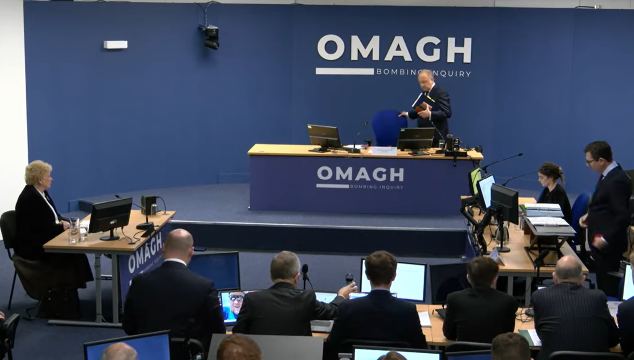 The Omagh Bombing Inquiry is underway
Former Ulster University academic O’Loan revealed repeated obstacles accessing information from police, saying her office was initially provided with incomplete material and was unaware of key internal reviews.
“We had asked for all the intelligence, and we hadn’t even been told about this very significant document,” she said of an internal review into the Omagh investigation.
She added: “It really was profoundly difficult... we were trying to almost draw teeth in terms of getting information out of the police.”
Tensions between the ombudsman and police escalated as her investigation progressed. O’Loan said there had been “intervention” from the Northern Ireland Office before publication of her report and that its contents were leaked to the media.
She revealed that during a private meeting at Hillsborough Castle two days before the report’s publication, former RUC Chief Constable Sir Ronnie Flanagan sought to persuade her not to proceed.
“He, among other things, told me that I was going to destroy the peace process, that my office would never recover,” she said.
According to O’Loan, Flanagan also told her she had destroyed her relationship with the police. She said she responded by urging him to acknowledge shortcomings in the Omagh investigation and improve intelligence-sharing systems.
O' Loan recalled telling him, “All you have to do, Ronnie, you have to admit there’s a problem with the Omagh Bomb investigation, and really get it going and resourced, and you have to set up systems for the dissemination of intelligence.”
She added that she was “shocked” by the meeting and later received a phone call from Flanagan urging her not to publish the report.
Mrs O'Loan published her report and concluded that while action on intelligence supplied by a key informer was unlikely on its own to have prevented the bombing, police had mishandled important intelligence and that senior leadership failures had significantly reduced the chances of identifying and convicting those responsible.
O’Loan said she now believes there is a “very cogent argument” that more could have been done to prevent the attack.
Sir Ronnie Flanagan, who is also due to give evidence to the inquiry, contests O’Loan’s account of their 2001 meeting. When it was suggested to O’Loan that the meeting had been conciliatory in tone, she defiantly countered: “No. It was a very, very unpleasant meeting.”
See More: Nuala O'Loan, Omagh
