





AN ORAL history film has preserved the memories of 17 Irish people who left Ireland for Derby in the 1950s and 1960s.
Their stories were captured in Our Story: A History of the Irish in Derby, an oral history short film project created by University of Derby Associate Professor of Media and Culture Daithí McMahon in collaboration with the Derby Irish Association.
The film includes the experiences of 17 first-generation Irish emigrants, covering their childhoods in Ireland, why they emigrated, their journeys to Britain and the lives they built after arriving.
For McMahon, it was imperative to preserve the stories of a generation that was already ageing.
“We knew that there was an urgency around the whole thing because time was of the essence,” he said.
That urgency has since become even clearer.
“People have reached out to me whose grandparents took part. I’m sad to say a number of those who had been interviewed have passed away.”
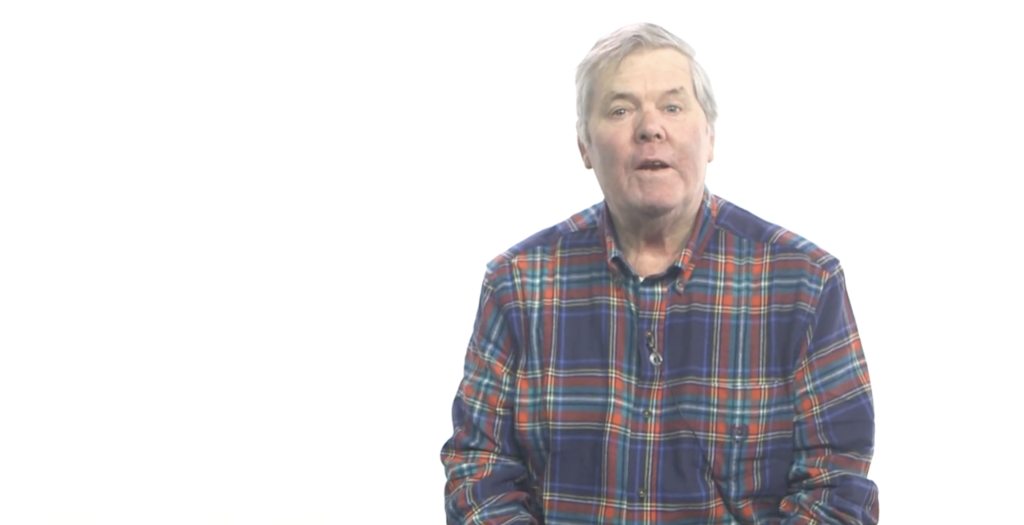 Patrick Francis Dwyer, from Co Laois, who took part in the film (Photo by A History of the Irish in Derby)
For their families the recordings offer the chance to hear their grandparents talking about their own lives.
“For a lot of people, it’s an archive that is open to them where they can watch their grandparents back,” McMahon said.
“It’s something we don’t typically ask,” he said. “I mean, how often do we sit down with a microphone and interview our relations who are getting elderly?”
McMahon’s own life has been shaped by migration.
Born in Dublin in 1979, he moved with his family to Canada in 1988, during a high point of Irish emigration.
“We lived there for 11 years, and then I moved back to Dublin,” he said.
He remained in Ireland until 2016, completing his master’s degree and PhD before moving to Derby to work at the university.
“Part of my research actually feeds into my own journey and what I studied,” he said.
 University of Derby Associate Professor of Media and Culture Daithí McMahon (Photo by Richard Richards)
After moving to Derby, McMahon became involved with the Derby Irish Association.
“I think maybe, the first St Paddy’s Day we were there,” he said. “That’s how we met and got involved with each other.”
The association had secured funding through the Irish Government’s Emigrant Support Programme from the Department of Foreign Affairs, with the aim of creating an oral history and archive documenting Derby’s Irish community.
McMahon began working with Martin Cassidy of the Derby Irish Association, combining the group’s community connections with his media experience and access to university equipment.
“We were able to achieve a really outstanding project in many ways.”
The interviews were designed to capture the whole emigration journey.
“I devised a general pattern around it, which talked about their life in Ireland, why they left and what they were leaving, their experience of travelling over, and their experience of settling in over here and what their lives have been like since,” McMahon said.
Many of those interviewed came from rural Ireland, particularly Mayo and Sligo, as well as Cork, Kildare and the Midlands.
But there was one notable absence.
“No one from Dublin,” McMahon said.
“That’s another thing we saw; they didn’t come from these big urban centres like Dublin, where there was more employment and opportunity.”
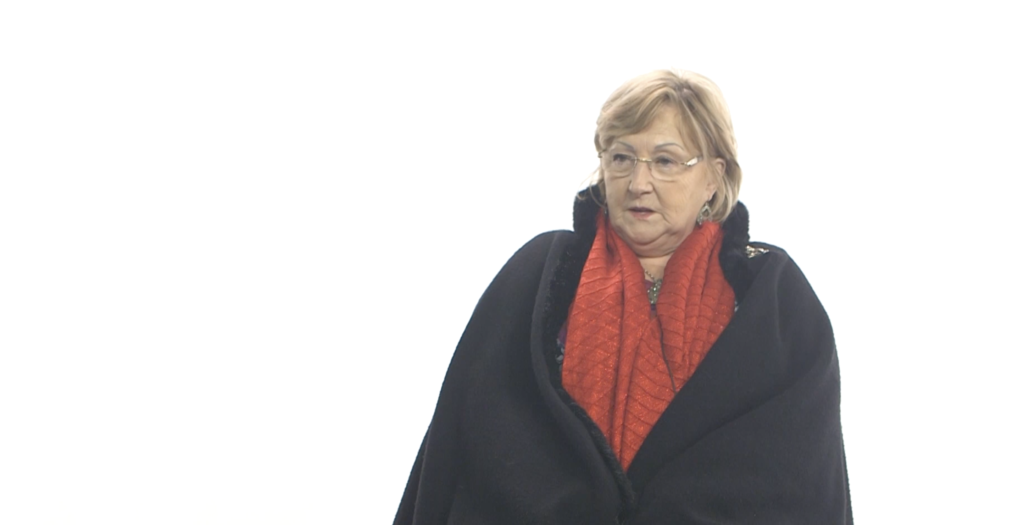 Monica Dwyer, originally from Co Roscommon (Photo by A History of the Irish in Derby)
Instead, many had grown up on small holdings in large families, where emigration was often part of the family's future.
“First of all, as they described it, this kind of idyllic Ireland, because they all came from rural settings,” McMahon said.
“You’d have one person who would inherit the farm, daughters who might get married away, someone enters the priesthood, and the rest would emigrate.”
The interviews were carried out over two or three days at the University of Derby.
The recordings now form an important archive of the Irish experience in Derby, preserving memories in a film free for anyone to watch.
“For me as a researcher, it became a very valuable set of findings for how we learn, as the Irish, where they come from, what it’s like, and what they’ve done since they’ve been here.”
And McMahon believes there is still much more of the Irish story in Derby waiting to be told.
“We definitely want to do another film."
If you want to see the short film you can watch it: here
Everything from irishpost.com and the print edition is available on the Irish Post App — plus more! Download it for Android or Apple IOS devices today
