





A NEW building designed to hold Ireland’s official public records has been officially opened this week.
The opening of the new archive repository, which has been built at the existing National Archives site on Bishop Street in Dublin, has been described as an “historic moment” for the nation as it will “future proof the records of the state”.
It was officially unveiled by Ireland’s Minister for Culture, Communications and Sport Patrick O’Donovan and Minister of State with responsibility for the Office of Public Works, Kevin Moran.
The redevelopment of the site, which has taken 98 weeks to complete at a cost of €37.1m, began in May 2024.
Completed under the National Cultural Institutions investment programme, as part of the Government’s Project Ireland 2040 strategy, the project was designed to increase capacity for archive storage at the Bishop Street site, which has been full since 2013.
The National Archives holds the official records of the state, as well as private collections. These include more than 60 million records dating from the 16th century to records relating to modern Ireland.
The main collections are kept securely at buildings on Bishop Street, Dublin 8 where there are also public reading rooms, office accommodation and archival storage.
There is also significant storage at the original building of the Public Record Office at the Four Courts.
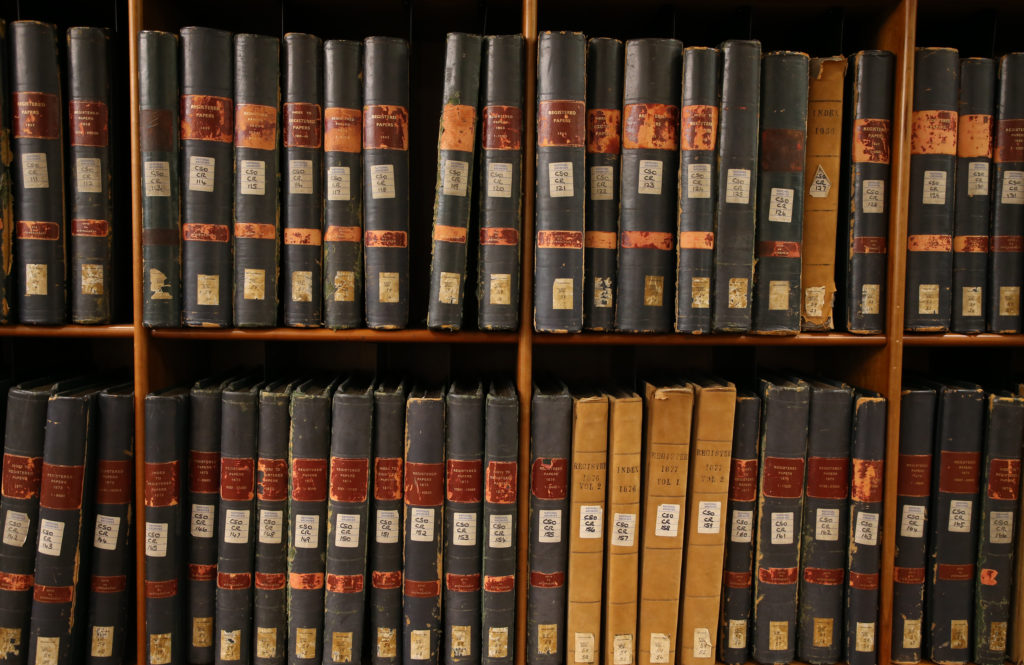 Ireland's National Archives hold more than 60 million records related to the state
“Despite its very large footprint, the Bishop Street building (former Jacob’s biscuit factory) has been full since 2013,” a Government spokesperson confirmed.
“This re-development will accommodate over 300,000 archive boxes in a purpose built dedicated archival repository and will enable the National Archives to house its current collection of 60m records as well as receiving the vast quantities of state records held in government departments awaiting the completion of this project,” they added.
Speaking at the launch of the new building, Minister O’Donovan said he was “delighted to unveil what is a truly transformative project for the National Archives”.
“This is significant project for one of our cultural institutions and ensures that the National Archives can meet its evolving needs in a sustainable and future-proofed manner,” he added.
“We saw during the Decade of Centenaries and with the recent release of the 1926 Census, the vital role the National Archives plays in preserving the precious records of the State.
“This expansion and conversion of the Bishop St building into a modern, state of the art, secure and environmentally-controlled repository, complying with internationally accepted archival storage standards will provide an increase of two-thirds in the total storage capacity of the National Archives and will enable the National Archives to continue to deliver on its statutory responsibility to protect and preserve the records of government,” he explained.
Minister Moran said the new repository marks an “important investment in safeguarding the state’s physical records and collections for the future”.
“This purpose-built facility provides the necessary space required to accommodate not only our current volume of records but also ensures our archival heritage is protected, securely preserved and accessible for generations to come,” he explained.
“I am delighted that the repository is now complete, ready to meet the evolving needs of the National Archives now and into the future.”
Director of the National Archives Orlaith McBride, said the opening of the new site was an “exciting time” for her team.
“We are thrilled to have such an incredible building completed for us by the OPW and Duggan Brothers Construction,” she said.
“This investment by Government in the National Archives is a real demonstration of the value it has in us as an institution and in our role.
“We look forward now to our next chapter when we will work closely with our partners across government departments to enable them to transfer their back-log records to our new building and enable them to be made available to the public.”
Everything from irishpost.com and the print edition is available on the Irish Post App — plus more! Download it for Android or Apple IOS devices today.
See More: Dublin, Ireland, National Archives, State Papers
