




DERRY, perched at the top of the country, overlooking Lough Foyle which opens onto the Atlantic, boasts a climate that could fairly be described as bracing.
With a sky that usually means mischief, the wind whips off the Atlantic like a grudge. It has a constant presence here in Derry - indeed there’s a rumour that one day the wind stopped blowing and everybody fell over.
No matter the climate, people have been living here for thousands of years, over which time the name of their town has mutated.
Doire Colmcille was eventually shortened to Doire, Derrie or Derry. Soon, however, the city was to gain another name. Its troublesome prefix “London”, in honour of the Corporation of London’s role in the ‘plantation’ of northwest Ulster, was adopted in the 17th century. However – and it’s a very big however - people have long memories in these parts, and since the new name was imposed only recently (1613) it never really caught on.
Derry remains a predominantly Catholic / nationalist city (some 70 per cent or more), and it’s safe to say that in general, no nationalists call the city Londonderry, while a few Derry unionists do.
For visiting dignitaries – not wishing to diss one side or another – this duality causes problems. Bill Clinton, peace-processing in nhe city, managed to avoid calling Derry anything. Instead he continually referred to “this beautiful city on the banks of the Foyle” – and he wasn’t wrong there. Beautiful, but at times benighted.
Meanwhile a local BBC DJ, Gerry Anderson, coined the masterly name ‘Stroke City’ as in ‘Derry-stroke-Londonderry’, so as not to offend anyone. Gerry, sadly, is no longer with us, but his name for the place still enjoys some currency.
Today Derry’s history is an undoubted selling point, occasionally seeming to have more than it can handle
Events, both heroic and terrible, lurk round every corner of the city. Its hills and valleys have seen St. Colmcille found his 6th century church here, gangs of labourers dragging rough-hewn stones across the Bogside to build the city’s walls, King James’ troops massing for the siege of 1689 in a crucial away tie. Later came the docks, shirt factories, linen mills and distilleries.
Now all gone, but not before leaving their indelible mark on the long history of this dramatic city.
The Troubles, needless to say, have also left their imprimatur - Free Derry Corner in the Bogside has assumed Berlin Wall status, and despite the peace, Derry’s PSNI station still looks as impregnable as a Norman fort.
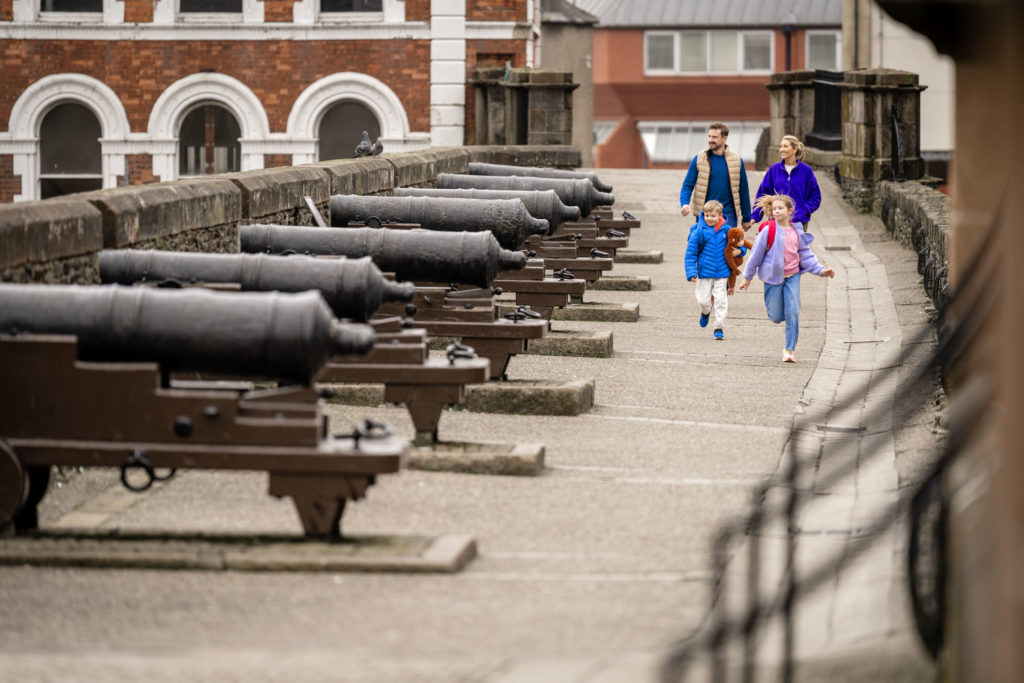 The historic Derry Walls date back to the 17th century and are among the best-preserved city walls in Europe. A walk along the walls provides stunning views of the city and a glimpse into its turbulent history. The walls have stood through centuries of conflict and remain a symbol of resilience and heritage.
Walking the walk
MARTIN McCrossan’s walking tour will take you round the substantial ramparts of a city that was as exposed an outpost, and equally as troublesome, as any of the Crown’s more remote 17th-century colonies.
Martin, a real innovator in Northern Ireland’s fledgling tourist industry, sadly died in 2015, but his daughter Charlene stepped in, and her team now provide excellent tours.
You'll hear how, in 1688, thirteen Protestant apprentice boys shut the city gates against the advancing forces of the Earl of Antrim, loyal to the Catholic King James II. The city was never taken, and its walls were never breached, reinforcing Derry's enduring nickname: the Maiden City.
The crisis was intensified by a letter warning that Antrim's troops intended to massacre the city's Protestant inhabitants—a message whose origins and reliability remain debated by historians. The siege itself ended after 105 days with widespread hunger and disease, claiming the lives of thousands of people. The whole story is told in fascinating detail at the Siege Museum.
Afterwards, the city's Protestant ascendancy became firmly established, while many Catholics lived in poorer communities outside the walls. The political and social divisions that followed would shape Derry's history for generations and formed part of the complex background to the Troubles that began in the late 1960s.
The ramparts are believed to be the last city walls built in Europe. The route begins at the Guildhall (home to the Savile Enquiry into Bloody Sunday) with its fine stained glasswork illustrating the city’s history, past the Harbour Museum, then on to the Apprentice Boys Memorial Hall, and finally to St Columb’s Cathedral.
The only complete unbroken fortifications of any city in Britain or Ireland, the walls wend past the four original entrances to the city – Shipquay, Ferryquay, Bishop and Butcher gates.
At Shipquay a plaque commemorates the ending of the Great Siege, in particular the death of Michael Browning, master of the ship the Mountjoy, which eventually broke the blockade. Browning was a Derry man:
“Near this spot landed the body of Michael Browning, Master of the ship Mountjoy. Of Derry, killed in action at the breaking of the boom July 28th 1689 while leading the van of the relieving squadron against the forces of King James II & Louis XIV.
“He died the most enviable of all deaths in sight of the City which was his birthplace, which was his home and which he had just saved by bravery and self devotion from the most frightful form of destruction.”
Fresh flowers are regularly left at the plaque.
Tower Museum
Just inside Magazine Gate stands the award-winning Tower Museum, built around the site of a 16th-century tower house. The views from the fifth floor are spectacular, as is the museum's outstanding Armada Shipwreck exhibition.
After battling the English fleet in the Channel, many ships of the Spanish Armada attempting to return home were wrecked by storms off Ireland's north and west coasts. Over the centuries, folklore has credited those shipwrecks with introducing everything from dark-haired Irish ancestors to potatoes—claims historians largely dismiss. Kerry people, however, are another matter entirely.
The museum's excellent Story of Derry exhibition traces some 2,000 years of local history, from the city's early Christian origins to the Battle of the Bogside in 1969.
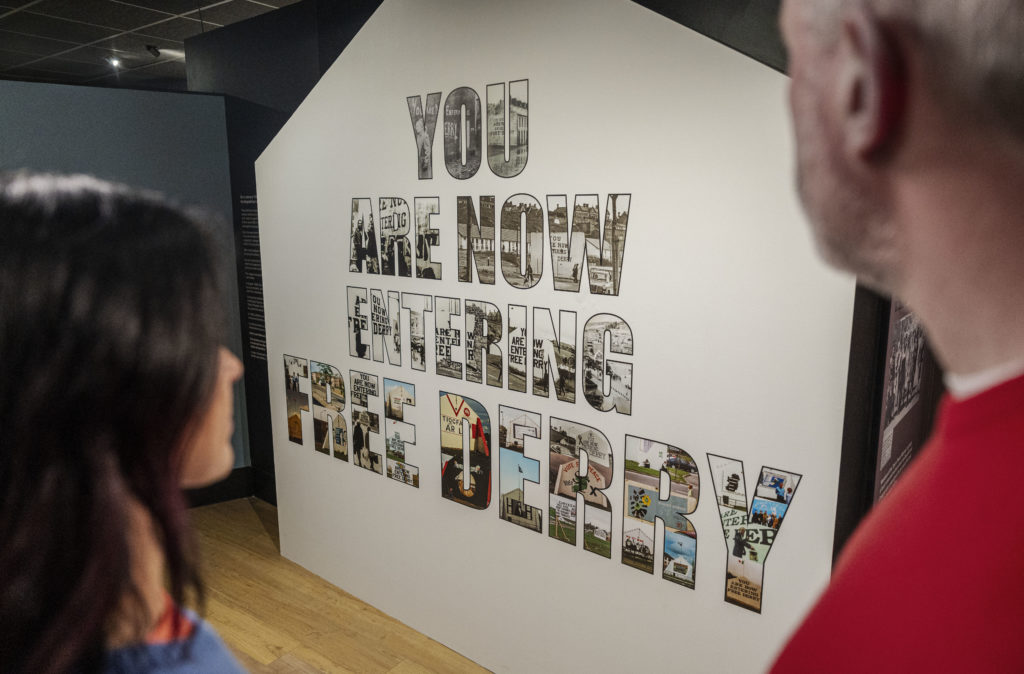 The Peacemakers Museum offers an in-depth look into Northern Ireland’s peace process, highlighting key figures and events that shaped its history
Museum of Free Derry
When British soldiers were deployed in Derry in 1969 they knew little about the place and were woefully unprepared.Some veterans and witnesses later recalled that newly arrived soldiers appeared so ill-prepared for Derry that they were said to have carried warning signs in Arabic left over from overseas deployments. Whether the story is literally true remains uncertain, but it has endured as a symbol of how little many of the troops knew about the city they had been sent to police.
Their political masters knew precious little more. When Anthony Crossman heard about the Civil Rights riots in August 1969 he assumed it was St. Patrick's Day "because that's when the riots usually take place, isn’t it?"
For more information and interpretation on the Troubles which erupted in Derry and quickly spread throughout the Six Counties, head for the Museum of Free Derry. You can journey through fortiesthe Civil Rights struggle, the Battle of the Bogside, Bloody Sunday, the IRA, the curfews imposed by the British Army during the worst months of rioting.
The museum is housed in the recently renovated flats at the southern end of Glenfada Park just off Rossville Street – a place central to many of the events of Derry’s, ahem, chequered history
Peacemakers Museum
Opened in 2024 in the Gasyard Centre in the Bogside, the Peacemakers Museum explores how Northern Ireland moved from decades of conflict towards the peace process and the restoration of devolved government.
Rather than concentrating on the origins of the Troubles, it picks up the story from the early 1970s and traces the political negotiations that culminated in the 1998 Good Friday Agreement and the years that followed.
Through artefacts, archive film, oral histories and interactive displays, it examines the roles played by political leaders, community activists and ordinary people in building and sustaining peace.
 St Columb's Cathedral
The cathedral
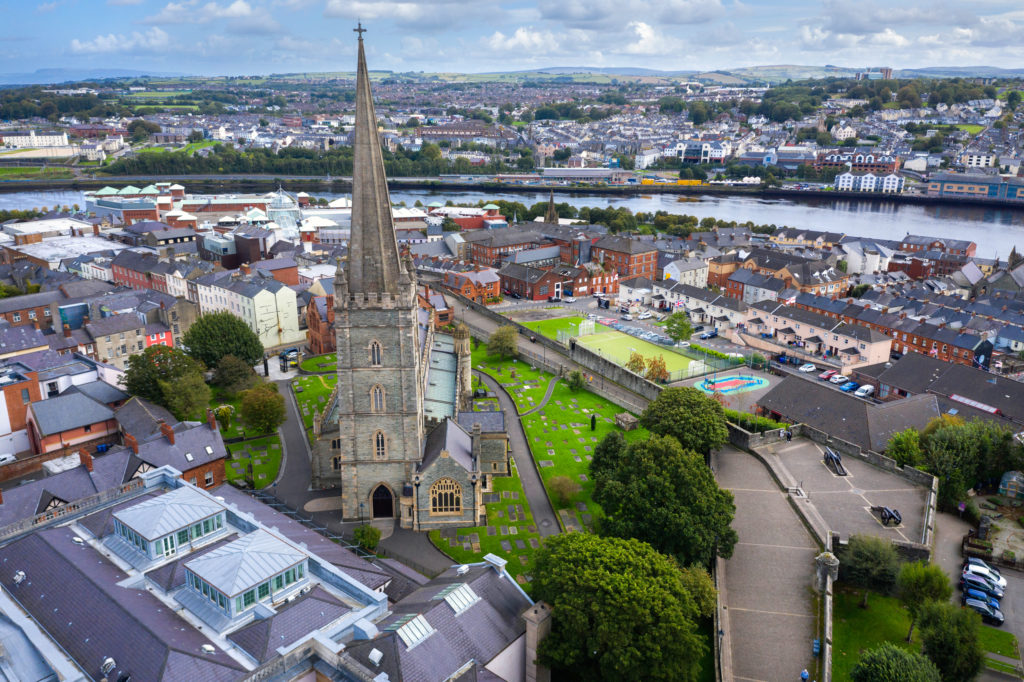
STANDING within the walls, St Columb's Cathedral is the city’s oldest surviving building, having been completed in 1633. Built during the Plantation of Ulster, it is named after St Columba, the sixth-century Irish missionary who helped spread Christianity in Scotland.
The Gothic-style cathedral has witnessed some of the most dramatic moments in Irish history, including the Siege of Derry in 1689, when cannonballs struck its walls and the congregation endured months of hardship. Today, visitors can admire its impressive stained glass, historic regimental flags, memorials and centuries-old artefacts, while enjoying panoramic views of the surrounding city walls and the River Foyle.
One of the cathedral's greatest treasures is the original locks and keys of Derry's city gates, preserved inside after they were famously slammed shut by the Apprentice Boys in December 1688, an act that helped trigger the Siege of Derry. Also on display is a hollow Jacobite mortar shell that was fired into the city carrying a demand for surrender rather than explosives – a rare example of seventeenth-century psychological warfare.
The building itself also incorporates a tangible fragment of medieval Derry. Set into the porch is a stone taken from the earlier Templemore Monastery, the ancient church destroyed during the upheavals of the late sixteenth century. In a sense, the cathedral physically links the medieval Gaelic city with the Plantation settlement that followed.
Another little-known curiosity is its bell tower. St Columb's possesses the oldest peal of bells in Ireland, several donated by Charles I in 1638. During the Siege of Derry, the tower served not only as a lookout but also as a signalling station, with messages conveyed by flags and beacons. Contemporary accounts record the bells ringing triumphantly whenever good news reached the besieged city, including reports that relief was finally on its way.
Finally, look closely at the seventeenth-century foundation stone. Its inscription proudly declares: "If stones could speake, then London's prayse should sounde who built this church and cittie from the grounde"—a reminder that the cathedral was as much a political statement of the Plantation era as it was a place of worship.
The school
COLUMB'S COLLEGE in Derry really is an extraordinarily over-achieving institution. One of the few schools in the world which can boast two Nobel prize winners - John Hume and Seamus Heaney – St. Columb’s is also alma mater to playwright Brian Friel, songwriter Phil Coulter (Puppet on a String; Congratulations, Ireland’s Call, The Town I Love So Well), football manager Martin O’Neill, writer Seamus Deane, journalist Eamonn McCann (the man who has been accused of starting the Troubles because he arranged the first Civil Rights march in 1968), Big Joe McLaughlin (better known as tenor Josef Locke), and assorted Undertones.
Another past pupil of St. Columb’s, musician Charlie McGee, was one of the most popular entertainers in Ireland during the 1940s and 1950sMourne. Charlie traded under the name of “Charlie McGee and his Gay Guitar” way back in those innocent days. His signature tune was The Homes of Donegal a hugely well-known song that saw him topping the bill at the Royal Albert Hall, and later sharing top billing with Slim Whitman at the Carnegie Hall in New York (where he was, reputedly, billed as Mr Homes from Donegal).
Derry’s other main school, the Protestant Foyle College, can also claim some success in the songwriting stakes. Percy French – who wrote The Mountains of Mourne, Phil the Fluter’s Ball and Ivor Skavinsky Skavar (you’d know it if you heard it) — attended the school.
The quick bite
Housed in the beautifully restored former army barracks at Ebrington Square, the Walled City Brewery combines award-winning craft beer with one of Derry's best gastropub kitchens. Founded by former Guinness brewer James Huey, it serves a changing menu of locally sourced seasonal dishes alongside beers brewed on site. If you're struggling to choose, order a tasting flight and sample several of its signature brews before settling in for dinner.
Part microbrewery, part restaurant, the food goes well beyond standard pub fare, with locally inspired dishes, excellent Sunday roasts and an extensive range of house-brewed beers, many available as tasting flights. It's an ideal stop after exploring the Peace Bridge and Ebrington Square.
Dishes such as Greencastle fish of the day, McAtamney's dry-aged sirloin on the bone, WCB smoked beef burger with Monterey Jack cheese and maple-bacon onion marmalade, chargrilled pork belly are all designed to pair with its house-brewed beers.
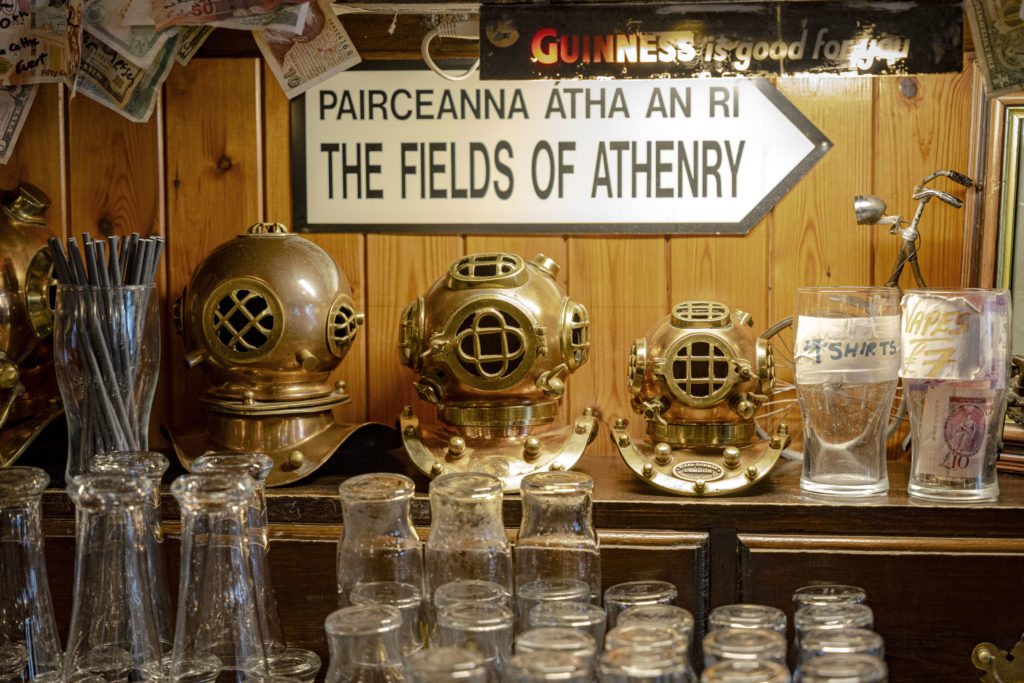 One of Derry’s liveliest pubs, Peadar O’Donnell’s is known for its traditional Irish music sessions and welcoming atmosphere. It’s a favorite among locals and tourists alike, offering a great selection of drinks and a genuine taste of Irish pub culture. Whether you’re after a relaxed pint or a night of live music, it’s the place to be.
The pub
For a lively evening, head to Waterloo Street, where several independent pubs sit side by side in the heart of Derry's historic centre. Peadar O'Donnell's is the best known, but the whole street buzzes at weekends with live music spilling through open doors and visitors moving from one traditional pub to the next. Just a short walk away, the famous Derry Girls mural has become another must-see stop. So, this is a top place for both sightseeing and nightlife.
Peadar O'Donnell's
For a top seisiún, this is the place. Named after the celebrated Irish republican, socialist and writer, Peadar O'Donnell's has long been one of Derry's key places. Every corner is packed with quirky memorabilia, old signs, flags and antiques. Not a breath of minimalism here.
THE FESTIVAL
Halloween Festival
Every autumn, Derry lays claim to hosting Europe's largest Halloween festival, with hundreds of thousands of visitors descending on the city over several days of parades, music, street theatre and spectacular carnivals. Drawing on ancient Celtic traditions (or probably pre-Celtic) associated with Samhain, the celebrations transform the walled city into a giant open-air stage filled with giant puppets, illuminated installations and costumed performers.
The festival has grown from a modest local event into one of Ireland's biggest tourism attractions.
The hotels
The City Hotel
For river views, try the City Hotel: a modern property that’s home to good-value rooms and Derry’s only roof-terrace bar
cityhotelderry.com
The Shipquay
At Shipquay Gate, this former bank has become a perfect 21-bedroom boutique option.
shipquayhotel.com
The Bishop’s Gate Hotel
Derry’s grandest hotel occupies the former premises of the Northern Counties Club. Behind its elegant Victorian façade are beautifully restored period interiors, luxurious bedrooms and the acclaimed Wig & Gown Champagne Bar. Its location, beside the historic city walls put it within easy walking distance of the Cathedral, Guildhall and Bogside.
For further information visit Ireland.com
Everything from irishpost.com and the print edition is available on the Irish Post App — plus more! Download it for Android or Apple IOS devices today
See More: Derry, Northern Ireland, Travel
