



EVERY picture tells a story, they say.
And when it comes to the story of Ireland - from its complex history and pre-Christian origins to the cosmopolitan modern state that we know today – well there is much to tell.
Ireland holds a significant place in world history.
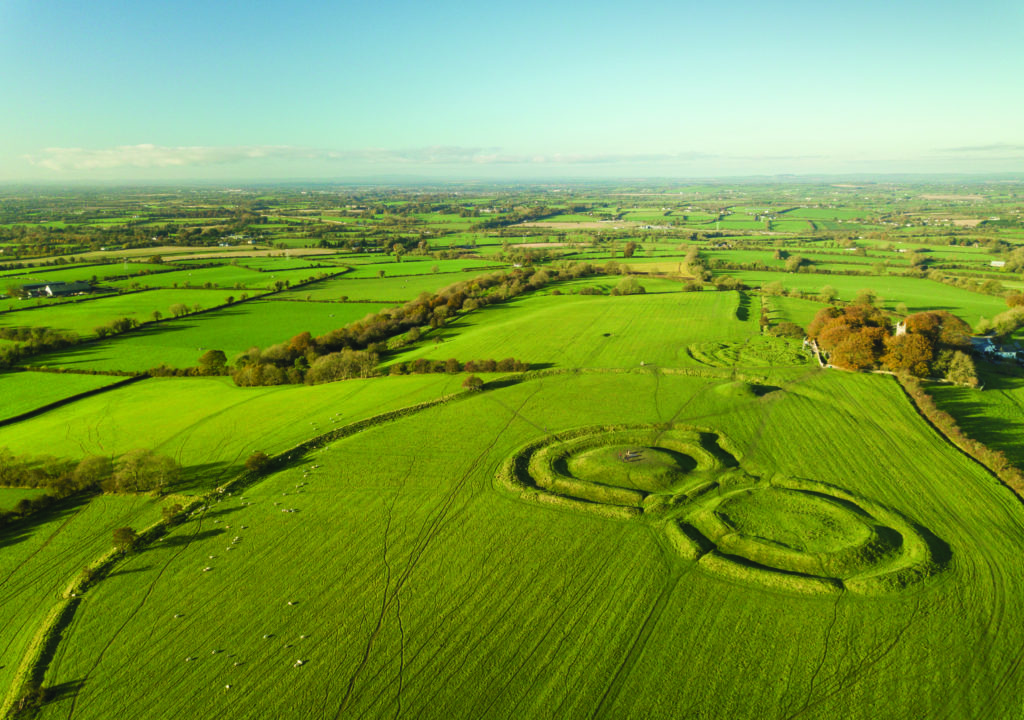 County Meath’s Hill of Tara is considered the ancient capital of Ireland (Pic: Remizov/Shutterstock)
It was the first place in the British and Irish archipelago to be settled by Christian monks, but it was also one of the last places in Europe to be populated by humans.
Over the centuries that followed this small island has suffered Viking invasion and Norman colonization, British decimation as well as a Great Famine.
It also saw the mass migration of great swathes of its people to the New World and bore the brunt of a brutal civil war before eventually gaining independence in the early 20th century.
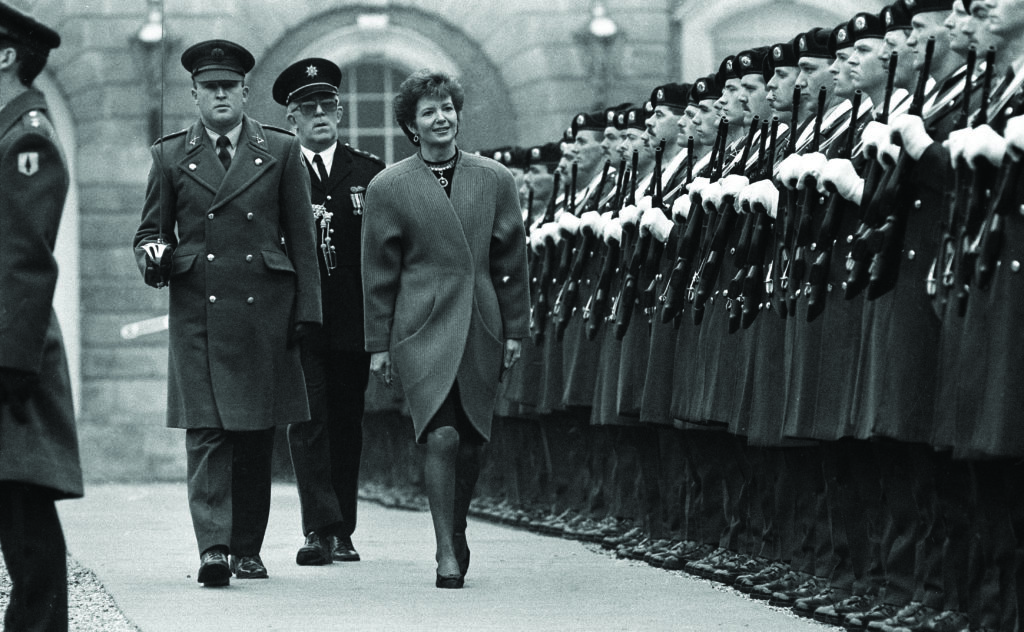 Former President Mary Robinson inspects a Guard of Honour drawn from the 2nd Infantry Battalion, Cathal Brugha Barracks following her inauguration in 1990 (Pic: Independent News and Media/Getty Images)
Despite the complexities of the more troubled eras of its past, Ireland today is a dynamic island with a blossoming economy and culture and a well-respected and hugely successful global diaspora.
And that is the story that author Dominic Connolly - whose own roots lie in Co. Galway on his father’s side - tells in his latest book.
In A History of Ireland: Culture, Art, Landscape and Architecture, the London-based journalist offers an account of the nation through stunning photographs and easily digestible facts and figures about the key moments in the island’s history.
Arranged chronologically, from ancient times to the 21st century, the book provides a pictorial exploration of a land that is well-known but often little understood.
Its glossy pages feature the remains of the country’s many Iron Age hill forts, such as the atmospheric stone fort at Grianán Aileach.
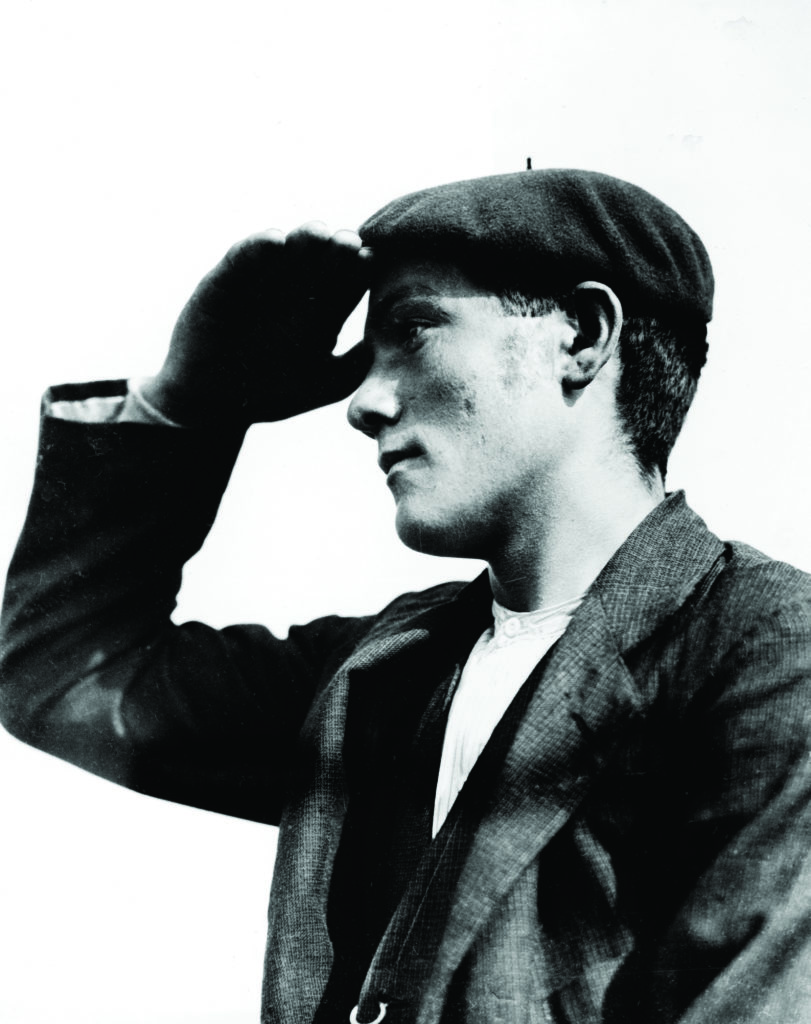 An Irish immigrant shields his eyes in order to catch a glimpse of New York City across the harbor, from Ellis Island, in the early 20th Century (Pic: FPG/Getty Images)
They go on to explore the first Christian colonies in the monastic settlement at Glendalough in County Wicklow as well as the facts behind the legend of St Patrick and the beauty of Ireland’s Book of Kells - an illuminated manuscript of the Celtic Gospel written in the ninth century.
There is also space devoted to the Plantation of Ulster in the 17th century, where English and Scottish settlers established Protestant communities, and an examination of the events which led up to the Easter Rising and the traumatic war for independence which followed, which ultimately led to the political shape that Ireland currently finds itself within.
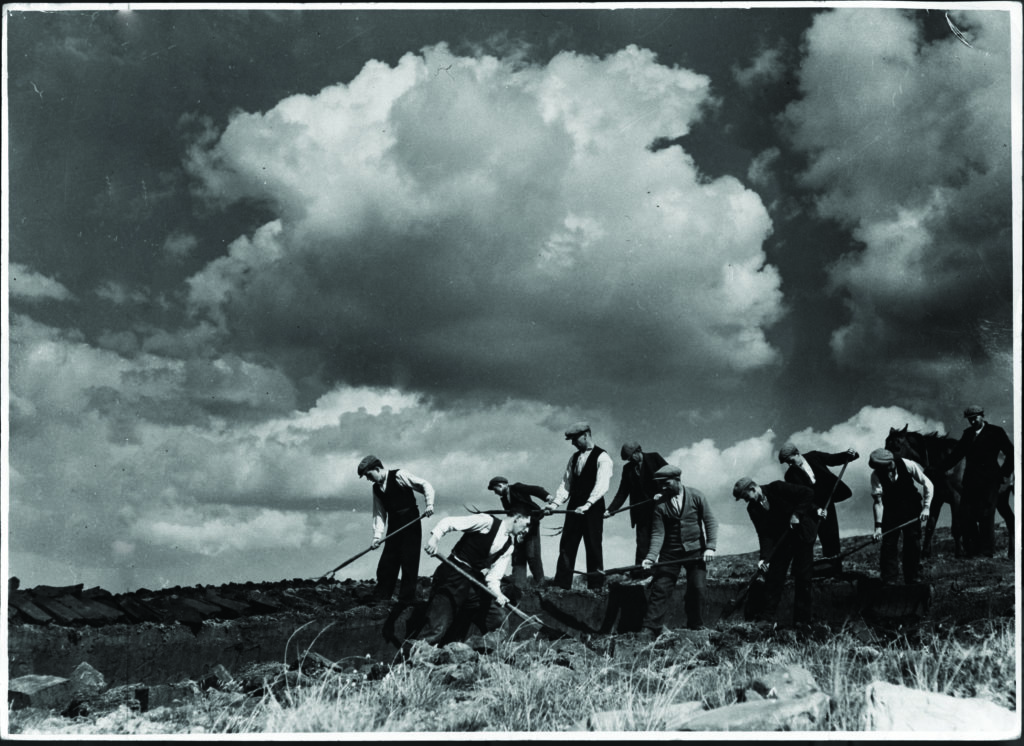 Nine farmers help a tenth cut peat in the Republic of Ireland in the 1940s (Pic: Hulton-Deutsch/Corbis/Getty Images)
Today modern Ireland is “a place of prosperity, with thriving cities like Dublin and Belfast alongside beautiful countryside”, the author states as he recounts the ways in which the island has continually picked itself up and dusted itself off in the face of adversity.
The book is arranged in chapters, from pre-Christian Ireland all the way to Modern Ireland, and it is teeming with mini profiles of iconic Irish people who have made a name for themselves and their nation along the way.
St Brigid, Wolfe Tone, Ned Kelly, Mary Robinson and Shane MacGowan are among the many that make an appearance.
Whether you are Irish, of Irish descent or a friend of the Irish, there is something in there for all.
Highlights from the book:
Pre-Christian Ireland
Connolly provides a fascinating overview the main kingdoms of In Tuisceart, Airgialla, Ulaid, Mide, Laigin, Mumhain, Cóiced Ol nEchmacht which began to emerge in Ireland during the fifth century. Readers can enjoy insights on Ireland in the Ice Age and the first people to call the nation home.
“The earliest settler – hunter gatherers – would have lived in shelters of animal skins or thatch spread over wooden frames, and would have numbered no more than a few thousand over the whole of Ireland,” Connolly states.
Stunning images show some of the relics of this period which can still be found today within Ireland’s landscape.
St Patrick
The spread of Christianity in fifth-century Ireland is inextricably linked with the iconic figure of St Patrick.
The development of Christianity was fundamental to the evolution of an Irish cultural identity and helped to maintain the flame of learning and education in Europe during the chaotic centuries that followed the fall of Rome.
“Although St Patrick is credited with bringing Christianity to Ireland, little is known about him with certainty, “ Connolly says.
“But the fruits of the Christian revolution in Ireland laid at his fet are plentiful, not least in the many monasteries that sprang up around Ireland from the sixth century.
The would go on to shape Irish society and become a binding force between sacred and secular Ireland.”
Vikings and Normans
The first recorded Viking raids on Ireland took place in 795 AD, when islands off the north and west coasts were plundered.
In the summer of 1167, a small band of Anglo-Norman adventurers sailed from Pembrokeshire and landed on the County Wexford coast.
It was a seismic moment in Irish history, marking the establishment of the Lordship of Ireland: in effect, the first English colony.
“In 795, Vikings looted the island of Lambay, off the coast of eastern Ireland, just north of what is now the city of Dublin.
Three years later they raided the Kingdom of Brega, off the eastern mainland.
“Thus began 200 years od raids from Scandinavia that unsettled an Ireland that was later seen to have been in the ‘golden age’ of Christian Irish culture,” writes Connolly.
Protestants and Catholics
In the spring of 1606, a wave of Scots settlers came ashore in County Down.
This was the beginning of the Plantation of Ulster: a systematic British and Protestant settlement of the northern half of Ireland.
With the defeat of a Spanish expeditionary force at Kinsale in County Cork at Christmas 1601 came the definitive victory of English military power in Ireland – a fact emphasised by the ‘Flight of the Earls’ in 1607, when a large proportion of Ulster’s Gaelic aristocracy fled Ireland for the continent.
“Before Henry VIII, religion was not an issue in Ireland,” says Connolly.
“Both the Irish and the invading Engligh were Catholic, but with Henry’s split from Rome, he wanted all his lands to fall under his church.
“However, Ireland, with its different history from England’s, did not readily comply and so a series of measures were put in place to make Catholics second-class citizens in Ireland – measures that ran throughout the 16th, 17th, 18th and 19th centuries.”
Famine and emigration
In September 1845, as the first potatoes were being lifted in fields across Ireland, word began to spread of a disease affecting the new crop. Blight was spreading across the countryside.
Of a pre-famine population of some eight million, over a million died of hunger and famine-related diseases.
“The disease that rotted Ireland’s potatoes – which had become a staple food there – was first noticed in North America,” Connolly explains.
“In 1843 and 1844 it destroyed potato crops in the eastern United States. It was imported to Ireland when potatoes were carried by ships east across the Atlantic.”
He adds: “At least a million people are believed to have emigrated because of the Famine.
“Ireland had been seeing its people leave since the mid-eighteenth century, as opportunities for better lives emerged in Britain’s colonies, but the Famine produced a severe spike in emigration numbers.”
In the century between the Napoleonic Wars and the Irish Civil War, more than seven million Irish men and women left their homeland to begin new lives abroad.
Modern Ireland
Including everything from the creation of the Republic of Ireland to the Troubles in Northern Ireland and the peace process that followed and continues to this day, Connolly covers much ground in his final chapter.
He also pays attention to the spread of Irish culture across the globe and the people who have driven its success as well as the draw of the Emerald Isle as a destination for tourists.
“Now, tourism is one of the main drivers of the economy of the Republic of Ireland,” Connolly states.
“In particular, a heritage industry has grown up to show Ireland and its culture to those whose ancestors emigrated.”
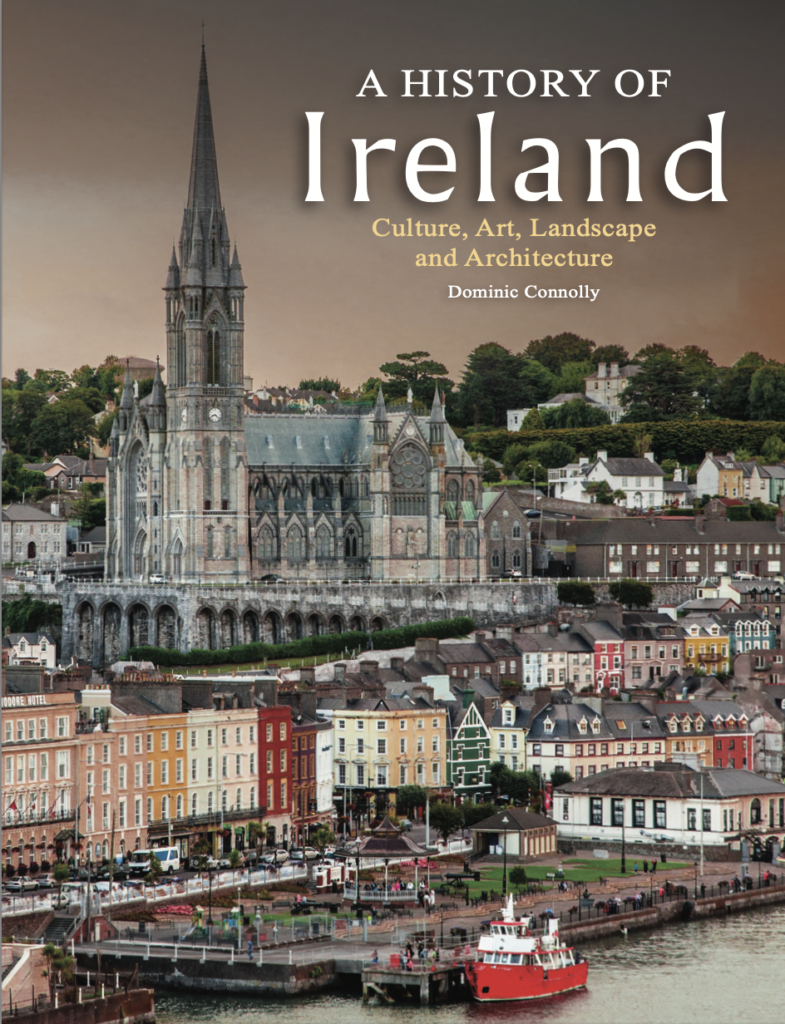
A History of Ireland: Culture, Art, landscape and Architecture, by Dominic Connolly, is available to buy now at all good bookstores.
All images taken from the book A History of Ireland (ISBN 978-1-83886-614-3) published by Amber Books Ltd (www.amberbooks.co.uk) and available from bookshops and online booksellers (RRP £19.99/$29.99/CAN$38.99).
Everything from irishpost.com and the print edition is available on the Irish Post App — plus more! Download it for Android or Apple IOS devices today.
See More: Dominic Connolly, History, Ireland
